

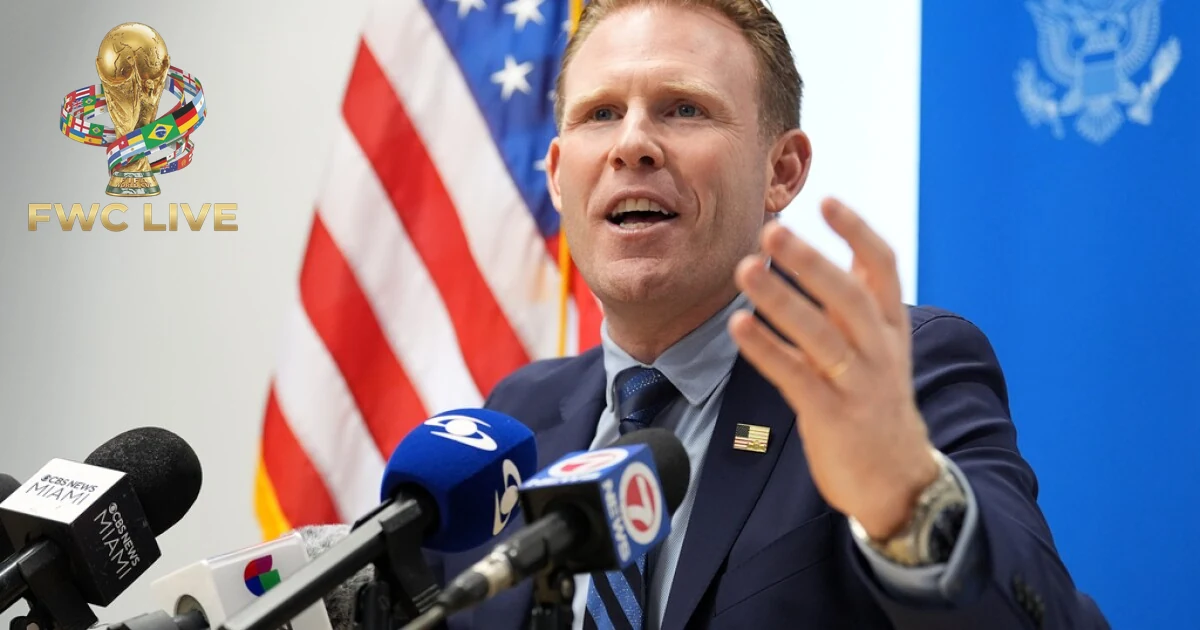
World Cup 2026 security planning is now fully in opening-week mode. U.S. officials say the tournament must be managed as 11 linked regional events. That framing shows how complex the operation has become before a ball is even kicked.
The concern is not one single threat. It is the need to track patterns across cities, climates, and crowd profiles at once. So security is being built as a shared network rather than separate host silos.
Why The U.S. Sees A Multi-City Threat Picture
Officials say what appears in one host city may quickly matter in another. A trend spotted in Miami could help planners respond faster in Seattle or elsewhere. That is why information sharing has become one of the main themes of the final build-up.
The numbers explain the pressure. This tournament brings 48 teams, 104 matches, and millions of supporters. A normal event plan does not cover that scale well enough.
What Resources Are In Play
Host cities received $625 million in federal security funding. Officials say part of that will reimburse local law enforcement for the extra load around matches and fan events. That support is large, yet the coordination problem is still bigger than money alone solves.
Planners have also used other major events as rehearsals. They studied logistics and crowd management earlier this year to refine their World Cup setup. That work now shifts from planning rooms into working venues.
Heat planning sits close to the center of that work. Officials are preparing for long fan walks, crowded transit points, and daytime kickoff exposure. A security plan now has to cover medical surges as well as policing. That blended model reflects what this tournament has become.
What Else Is Being Monitored
Security officials said they are also tracking health risks that could affect operations. One example is the Ebola outbreak in Congo and Uganda, which has required screening and camp-level caution around the Congolese team. That shows how public safety and tournament logistics are now tightly linked.
The broader point is simple. World Cup 2026 security is no longer just about stadium gates. It now covers health alerts, heat plans, transport flow, and cross-city intelligence at the same time.
The linked-city model should also change how fans read local incidents. A disruption in one market may trigger faster checks elsewhere on the same day. That is normal in a shared command setup. The aim is not alarm, but faster response before small risks grow.
Frequently Asked Questions
How are officials planning World Cup 2026 security in the U.S.?
Officials say they are treating the event as 11 linked regional operations with shared intelligence and coordinated planning.
How much federal funding has gone to World Cup 2026 security?
Host cities received $625 million in federal security funding to support preparations and reimburse extra law-enforcement costs.
Is World Cup 2026 security only about stadium threats?
No. Officials say the work also covers health risks, heat mitigation, transport issues, and information sharing between host cities.
The American side of this tournament is not planning for one big weekend. It is planning for weeks of linked pressure across the country.
That makes security one of the biggest opening stories of World Cup 2026.
That scale explains why officials are talking about regional operations instead of isolated stadium plans. The event runs for weeks, not one night. Every small adjustment now can save time once the crowds swell.
Stay tuned to FWCLive.com for the latest FIFA World Cup 2026 updates.
Read Also: Andy Robertson Embraces Scotland World Cup 2026 Return